
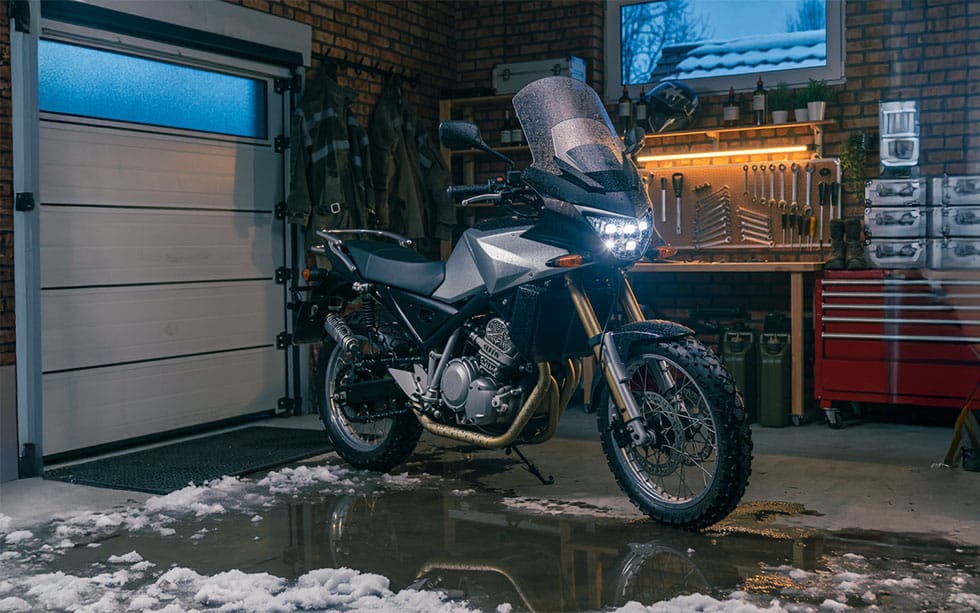
The clocks have gone back, and plenty of bikes are heading into the garage until spring. Here’s the catch: a bike that sits unseen for months is easy to forget about. DVLA records show 16,585 motorcycles were reported stolen in the UK in the past year, roughly one every 32 minutes.
These six winter motorcycle security tips draw on UK police crime prevention advice and what our team at Datatool has learned from decades in motorcycle security. Most of them cost little or nothing.
At a glance
- Combine several measures, because each extra layer adds time and effort for a thief, and thieves tend to move on to easier bikes.
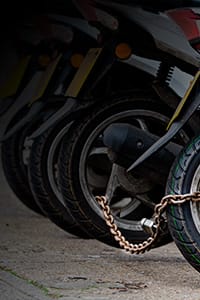
- Chain the rear wheel and frame to a ground anchor, keeping the chain tight and off the floor.
- Fit a disc lock or D lock to the front wheel, and never rely on the steering lock alone.
- Choose locks rated Sold Secure Motorcycle or Ground Anchor, and aim higher as your bike’s value goes up.
- Cover the bike even in the garage, so nobody can spot the make and model through a window.
- Use a trickle charger or run the engine for 15 to 30 minutes a month, which also keeps a fitted tracker topped up.
1: Layer up your motorcycle security
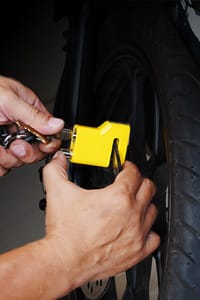
Layering your motorcycle security means using several measures together instead of trusting one lock. National advice on Police.uk and Warwickshire Police’s 2025 guidance both recommend combining measures, because every extra layer adds time and effort for a thief.
Thieves tend to pick the easiest bike in the street. Bennetts BikeSocial’s security guide says any lock meaningfully cuts the risk, and the aim is to make your bike a less attractive target than the next one. Its data suggests a disc lock alone cuts the chance of theft by around a factor of three.
A sensible winter setup for a bike kept at home includes:
- a chain through the rear wheel and frame to a ground anchor
- a disc lock or D lock on the front wheel
- a cover, with the bike inside a locked garage or shed
- electronic protection, such as an alarm system or motorcycle tracker
If you already have a Datatool alarm system fitted, count it as one layer in that setup. Physical locks slow a thief down, and the alarm makes sure someone hears about it.
Quick TEST:
Could someone wheel your bike out of the garage in under a minute with the locks you use now? If the answer is yes, add a layer.
Tip 2: Anchor it for the long stay
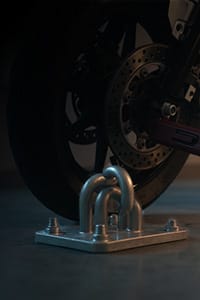
If your bike is going to sit in the same spot for weeks, give it something solid to be locked to. Police advice is to run a chain lock through the back wheel and anchor it tightly to a fixed object, such as a ground anchor or street furniture. If anchoring isn’t possible, thread the chain through the frame and back wheel instead.
Warwickshire Police advise keeping the chain tight and off the ground, threaded through the rear wheel and frame. Bennetts explains why: a chain lying on the floor can be attacked with a sledgehammer, and keeping it raised takes away the room a thief needs to swing.
At home, a ground anchor gives you a permanent point to lock to every time you park up. Bennetts recommends a closed design that takes at least two cuts to defeat. Bolt-down anchors need solid concrete, while block paving or slabs usually mean digging a hole to set the anchor in.
Tip 3: Lock the wheels and controls
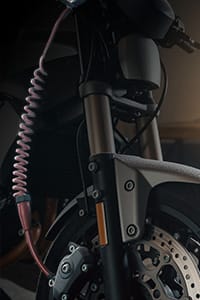
A parked bike that can’t be wheeled away is much harder to steal. Police.uk recommends a disc lock on the front brake disc or a grip lock on the brake and throttle, plus a D lock on the front wheel. It also advises always using the steering lock and removing the keys, even if you’re only stopping for a few minutes, but not relying on the steering lock alone.
Bennetts adds that a D lock around the wheel or forks is generally more effective than a disc lock, and can often be combined with your chain. A disc lock with a built-in alarm gives you a deterrent and an alert in one. It also warns that steering locks are easy to defeat, with stolen bikes sometimes found hidden as little as 60 metres from where they were taken.
If you use a disc lock, get into the habit of looping a reminder cable from the lock to your handlebar. It’s an easy way to avoid riding off with it still fitted on the first frosty morning you take the bike out.
Did you know?
A disc lock with a built-in alarm gives you a deterrent and an alert in one. Loop a bright reminder cable from the lock to your handlebar so you don’t ride off with it still fitted on the first frosty morning.
Tip 4: Choose rated locks and anchors
Not all locks and anchors are equal. Sold Secure, the independent testing body, rates motorcycle security products Gold or Diamond. Diamond products are also tested against angle grinder attacks, which the Gold standard doesn’t include. Sold Secure’s advice is simple: the higher the value of your bike, the higher the rating you should aim for.
Check the wording of the rating, too. Bennetts points out that a rating should specify “Motorcycle” or “Ground Anchor”, because one that just says “Sold Secure” may only be a bicycle-level test. Manufacturers resubmit products for testing every year, so confirm a product’s current rating on the Sold Secure approved product search. Many insurers require a Sold Secure rated lock, and some specify a minimum grade based on your bike’s value, so check with your provider before you buy.
Tip 5: Cover it, even indoors
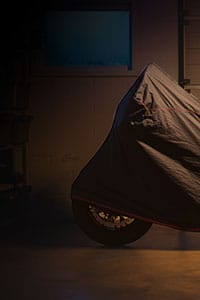
A cover does more than keep dust off. Police advice notes that a cover hides your bike’s make and model from thieves who target particular machines, and it adds one more time-consuming obstacle. That applies in the garage too, especially if anyone can see in through a window or an open door.
Wherever you can, keep the bike in a garage or shed rather than on the street. If you don’t have a garage, Bennetts counts a locked metal or wooden shed, or a shipping container on your property, as garaged for its own insurance policies, though other insurers may differ. Police.uk suggests going further at home by upgrading the door locks or fitting a door defender, and adding low-level dusk-to-dawn lighting. With long, dark winter evenings, a well-lit and well-locked garage is worth the effort.
Tip 6: Check in on your bike over winter

A battery trickle charger, also called a battery maintainer, keeps a laid-up bike ready to ride, and it’s a great bit of kit whether or not you have a tracker. If you don’t have one, start the bike and run the engine for 15 to 30 minutes once a month.
Check in on the bike every week or two to check the locks and cover are still in place, and keep your keys out of sight, away from the front door. Tracker owners should also check their subscription and contact details are up to date, and read the product user guide before the bike goes into storage.
Installer's view:
Installer’s view: a Datatool Stealth draws less than 2 milliamps in sleep mode, so the drain is minimal. While its internal battery is healthy, it only charges with the ignition on or the engine running. Over several months, that internal battery runs low and takes an emergency charge from the bike’s battery. Keeping the bike’s battery healthy keeps your tracker ready all winter.
Frequently asked questions
What is the best way to secure a motorcycle over winter?
The most effective approach is to layer your security. Police advice is to combine a chain through the back wheel to a ground anchor or fixed object, a disc lock on the front brake and a cover, ideally inside a locked garage. Electronic security such as a Thatcham-approved alarm system or motorcycle tracker adds another layer on top of those physical measures.
Is a ground anchor worth it for a motorcycle?
For a bike that lives at home, a ground anchor gives you a permanent, solid point to lock to, which is exactly what police advice recommends. Police.uk lists a ground anchor alongside garage security as one of the main steps for home storage. Look for a Sold Secure rated anchor and chain, and aim for a higher rating the more your bike is worth.
Should I cover my motorcycle if it's kept in a garage?
Yes. A cover hides the make and model from anyone looking in through a window or open door, and it adds another obstacle a thief has to deal with. It also keeps dust and damp off the bike during long periods of storage.
How often should I check on my bike during winter storage?
Every week or two is a sensible routine. Check the locks and cover are still in place and that nothing around the garage looks disturbed. To keep the battery healthy, use a trickle charger or run the engine for 15 to 30 minutes once a month. This matters if you have a tracker fitted, as its own battery will eventually draw a top-up charge from the bike’s battery during a long lay-up.
Do I need to tell my insurer my bike is in winter storage?
Policies vary, so check directly with your insurer. Some offer laid-up cover, and certified security or garage storage may affect your quote. Always make sure your policy details reflect any security you’ve fitted and where the bike is kept. And if the worst does happen, report the theft to the police with full details of when and where it happened.
Ready for Spring
Winter doesn’t have to mean worrying about your bike. Layer your security, anchor it to something solid and keep it covered and out of view. Then look in on it every couple of weeks until the riding season comes round again.
If you’d like advice on adding electronic protection to your setup, or you have a question about the Datatool product you already own, our UK team is happy to help.
Laid up for winter.
Still watched.
Quantum Self-Fit is a wire-free, battery-powered Thatcham S7 tracker you fit yourself by following the instruction guide. Arm it from the Datatool app before the bike goes into storage, and our monitoring team will call you if it moves.
- No installer needed
- Up to 3 years' battery
- IP68 rated